The Physics of Imagination
Teaching science as a story of wonder.

Science class in a classical school should teach a story - the human story. This is not only necessary, but I believe it is a moral imperative in a world in which the movies are becoming real: RoboCop and Hal are no longer science fiction.
A classical education should, at its heart, integrate the intellectual, moral, and spiritual, and in the sciences, we rarely see that accomplished well. Either the focus is devoid of theory and application, and leans so heavily on primary sources and their analysis, that students who may have a charism for the sciences find themselves at a disadvantage when trying to pursue the field after high school. Or, the subject matter is taught as a freestanding subject, somehow isolated from the others - and possibly even in opposition to the humanities. Those tend to be primarily focused on application. Many teachers have told me that the sciences, like mathematics, are ‘factual’ and aren’t really meant to be taught ‘classically.’ At a conference with other Catholic science teachers, many echoed that sentiment arguing that it is impossible to teach all that a higher level science class requires and add in any form of discussion. I have always taught the sciences as something that needs both an understanding of history, as well as an experiential aspect, and is incomplete without the ethical and spiritual. In fact, not teaching science ‘classically’ is partially to blame for our dystopian realities, and it does not take any more time to teach in this manner than it does a standard honors science class.
In fact, it may actually take less time, and produce better outcomes.
In science classes, teachers have the unique opportunity to help bridge the gaps by integrating a world often viewed as the antithesis of the spiritual world with the humanities, and asking students to wonder. St. John Newman wrote, “religion is here, and science there, and young men converse with science all day, and lodge with religion in the evening. …young men eat and drink and sleep in one place, and think in another: I want the same roof to contain both the intellectual and moral discipline.” How do we do that in the science class?
A classical education should develop students’ curiosity and help them articulate truths beautifully. Ultimately, education should shape and create a moral foundation. In our modern world, it is essential that highschool science teachers embrace this integration, so that students can articulate and advocate for a moral future in which the sciences will control ever more of our realities. We need nurses who can make ethical decisions, physicists who know where to draw the line on invading digital privacy, and an educated public capable of articulating an informed answer to AI, bots, and modern technological and medical advances.
This must begin by establishing a classroom that demands depth of soul. Shallow content and shallow ideas will never last, and will not serve to nourish either mind or soul. There can be no fear of approaching the difficult and deep topics, and doing so often. This cannot be a classroom of short-form entertainment or mediocrity.
Now, the majority of students in the classroom will never enter the sciences as a major. How does one then teach science in such a way as to teach goodness, beauty, and truth, and teach the 80% of students who come to class saying that they have never liked science or are not good at it, while also challenging and feeding the 20% who are actually interested?
Teach science as a living story.
Because science is our tale to tell.
For the sake of brevity, the following points are centered around chemistry and physics, the two classes I happen to be teaching this year at four different levels. Similar concepts apply to any other branch of science, of course - and I do plan to write specifically about some of those separately.
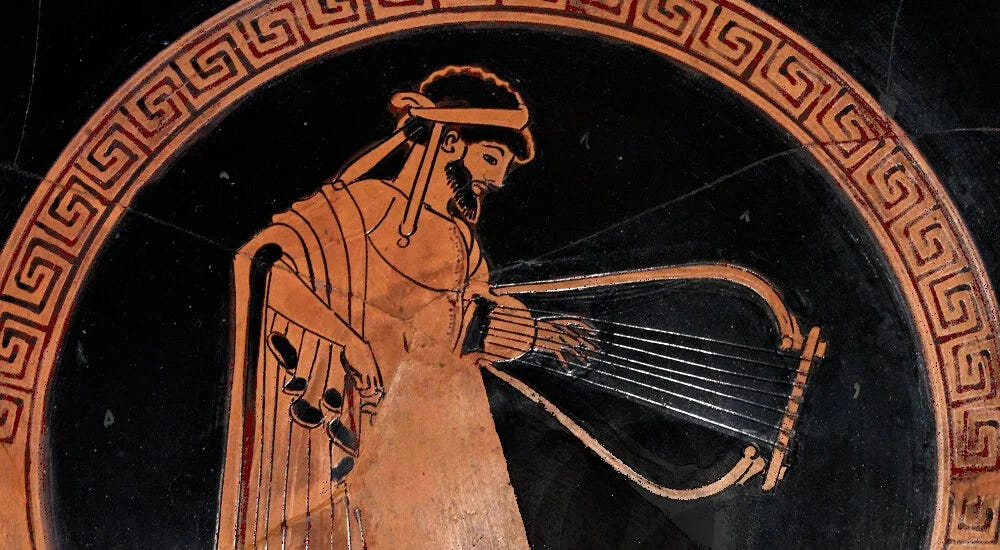
First, include the actual history. Teach the stories of the great scientists, and expose students to their methods, their challenges, and how they found their answers. Discuss the realities of those giants of the past who often suffered much, and persevered through significant challenges, or even died unrecognized or mocked for their work. The development of the atom as seen through the lens of history, developing from the ancient Greeks to the quantum model of today, is far more interesting and informative if it includes Democritus, Dalton, and Feynman. Listen to music, and tell students how music opened the heavens - quite literally - for Galileo and Copernicus. The story of the infinity paradox of David Hilbert, I have been reliably informed by more than one student, “broke their brain,” resulting in their investigating the concept of infinity in mathematics and physics for hours on their own.


Guide students through the history of the development of the concepts of forces, from the Ancient four elements to Newton, to the Theory of Everything of today, and then the whole idea of exploration and the changing nature of science becomes self-evident and self-explanatory. Science develops over time and is not an absolute. Who doesn’t love great stories? Students who develop heart palpitations at the thought of mathematics can understand the greatest concepts of physics and chemistry through the wonder of stories, but also become capable of reading data and discerning weak scholarship.
A further benefit to this approach is to highlight that seeking truth is not a privilege granted to an elite few who happened to have the intelligence or funding to make great discoveries. On the contrary, discoveries were more often than not accidental, or the result of stubbornly following an idea over years, through ridicule, and into destitution. The greatest minds of history were often stumped or challenged. But they all persevered, and they all understood what it means to care. This is not a world for the shallow and unimaginative, the bored, or the careless.


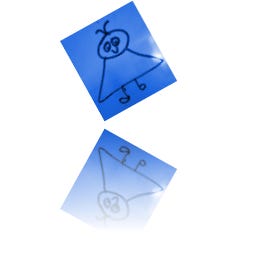
Second, tell actual stories. Describe acids and bases as characters, tell of the endearing love story of quarks, and turn entanglement into a Romeo and Juliet story. I have invented the Dinglethwop, or a curious-looking alien (one that I am capable of drawing with my limited artistic skills), that can have various colors. This alien can be in two places at once, it can mysteriously tunnel through a student’s wall and come bounce around his room, it can be red, green, or blue, and sometimes there are even Thwopdingles that can weirdly oppose the Dinglethwops. At times, these aliens drawn on my board and appearing on slides or handouts drive my students to exclaim, “But what ARE these things???” But once we get to the Quantum unit, they are so used to the idea of entanglement, that even presenting color confinement doesn’t seem so bizarre after all. Instead of trying to comprehend what a muon even is, I get, “How can we measure the mass of a muon or its lifetime, considering that it is so small and lasts for such a short period of time?” String theory and alternative universes? Well, they will usually at least consider the possibilities.
Third, experience science, and bring it into the everyday. Do labs regularly, and don’t shy away from letting students experiment on their own. In addition to acids and base labs, titration labs, pushing cars, launching rockets, listening to sounds and music, ask students to discover and explore uses of chemistry or physics in their everyday lives. Students have come into class wide-eyed with surprise at realizing that their doorknobs are an alloy, and having tried to determine how many alloys they could find in their homes. Or, they have written down all the ingredients in their shampoo, looked them up, and created Lewis dot diagrams of the compounds. They have built their own balistas and catapults - some so large that it took a trailer to haul them to class. They have made their own Chladni plates, designed their own rockets, and built devices to safely land eggs at a given speed from an upper-story window.
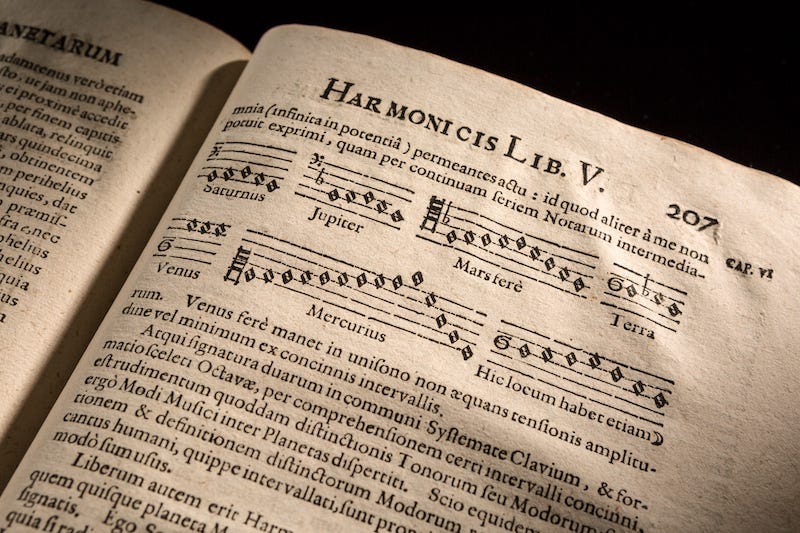
Fourth, develop the habit of analysis and connections. We begin the year discussing the difference between fact and truth*, and regularly debate how to discern ethical or moral boundaries, the common good, and current events. AI, bots, designer babies, mind-reading chips, self-driving cars, robots, gene editing, quantum computing, and cybersecurity - this is our modern reality, and students must be prepared to be able to discuss these coherently. Consequently, students can hear and learn about, and debate topics ranging from transhumanism to ethical uses of volatile chemicals. Is nuclear power destructive or is it a more ethical option than alternatives? Read Brave New World, and then discuss the implications of quantum computing, big data, birth control, and AI. Listen to specific great pieces of music, then introduce them to Pythagoras and his discoveries of mathematical ratios and harmonies, Kepler’s Harmonices Mundi, and Heimholz’s “Physiological Causes of Harmony in Music.” Let them know that Einstein played the violin to think through physics, Heisenberg was an accomplished pianist, Planck, in fact, nearly chose a career in music before choosing physics, and Brian May of Queen completed his PhD in astrophysics while maintaining his musical stardom.


Finally, keep the wonder alive. I have witnessed far too many science classrooms seemingly dedicated to the listing of facts to be memorized and focused purely on outcomes, results, answers. There was no time to wonder or question at all. Dive into the awesome power of a black hole, the humor in the discovery of the buckyball, the curiosity of what exactly gravity or energy is. If Einstein could call quantum entanglement “Spooky action at a distance,” we do not have to dress it up in educationalese either. Create delightful scenarios regarding heat retention and momentum, explain the physics of Ilya Malinin’s spectacular quads on ice, or Stephen Curry’s basketball shots to demonstrate Newtonian laws in action, and why a basketball needs spin.
This last point can be exceedingly difficult, especially now, when students come in accustomed to 3-D animation, fast-paced scenes, and AI-generated videos, or come in with an entitlement mentality, are perhaps stuck on the utilitarian (why do I need this?) or simply steadfastly refuse to engage in wonder. (All those teachers who have reached out in the past years aching at the changes they are seeing in their classrooms, I hear you!) Persevere anyway. If you can bring 80% of the class with you, you have still brought 80%, and you never know what seeds you have planted in those who set themselves apart.
While doing this, give your students capable of the higher math and the problem solving, interesting puzzles to solve, formulas to test, and concepts to explore. Keep everyone else challenged, but not overwhelmed. Studies show that experiential classes, particularly in physics, have a better long-term result in those who major in it. Former students currently pursuing terminal degrees in science have confirmed this reality, and some have credited their own discoveries with having experienced my science classes and being given permission to be creative and wonder. The rest can at least explain why it is a terrible idea to leave a spray can in a hot car, why not to go around a curb too fast - especially when there is ice on the ground - what quantum computing is, how our body works, and why we should consider carefully before blindly accepting all claims.
This method makes science approachable to every student, from the classified student to the future engineer. But more importantly, it makes the connections between God’s ordered world and His precepts a given in the classroom.
A student, G, recently wrote this in one of my classes:
“Most importantly, though, is the importance of learning human ethics in a world so full of mistakes. As our sciences and capabilities increase, so also does our curiosity to open Pandora’s box. As we develop stronger computers, we become more interested in the computers that God made. As we create robots, we think about the beings He made. Our curiosities can often get the better of us and we can push boundaries better left unbroken but Brave New World can give us crucial hesitations….Brave New World is a culmination of perspectives and issues that push us to challenge the world around us and do better and I can’t think of a better ideal for an education.”


This year, speaking to a variety of physicists, chemists, biochemists, and doctors, some of whom are working on research of the highest caliber, or teach science at well-known universities, one theme recurred regularly in different keys: Students entering the field are lacking in imagination, creativity, and comprehension of the larger picture. This is not even touching on the loss of attention span or the increasingly evident cognitive dysfunction. When I have felt discouraged at times by the Sisyphean task of my own final point, talking to them has been the greatest encouragement. One, who was not fully aware of what classical education even meant, commented that whatever this method was called, he needed to know it was out there, as he himself was becoming discouraged by what he was seeing in his college classroom. Another, after speaking to my class, said, “I wish my students asked these kinds of questions and made these kinds of connections.”
And that, precisely, is why we must teach science as a story. It is, after all, our story.
* The 'fact vs truth' concept is included in Mays' "Introductory Physics"

My science curricula is sourced from an extensive library I have curated over time. It would be impossible to list them all. However, some science texts and sources I regularly use include:

The Novare Science texts, including
Introductory Physics
General Chemistry
Physics: Modeling Nature
Advanced Chemistry
Life Science
Physical Science
Earth Science

Pearson Texts: Chemistry (Wilbraham), Physics (Giancoli), Conceptual Physics (Hewitt), and Biology(Miller & Levine)

Other texts: Chemistry, the Central Science (Murphy), Astronomy (Charlesworth), Faith, Science, and Reason (Baglow), Particles of Faith: A Catholic Guide to Navigating Science (Trasancos), Science was Born of Christianity (Trasancos), Bioethics from Catholic Answers, Losing Our Dignity: How Secularized Medicine is Undermining Fundamental Human Equality
(Camosy), Environmental Science for a Changing World (Hautman), Marine Biology, Mapping the Deep (Kunzig)

The Catholic Scientists online resources.

Primary sources.

And many, many more.

I am grateful these exist!

If something is not available, I write or create it myself. There are not many accessible resources for quantum physics, nuclear science, among other things. Perhaps, one day, I will compile all of these creations of mine into a useable resource for science teachers. When we have developed a way to increase the hours in a day, that may actually happen for me!